
By Kassandra Aguilar and Lauren Vlach
Successful FF&E for K-12 education projects does not happen in isolation. Furniture planning sits at the intersection of instructional goals, architectural intent, operational needs, and daily student experience. When FF&E consultants work in silos, the result is often misalignment. When collaboration is prioritized from the start, furniture becomes a seamless extension of the learning environment.
FF&E as an integrated part of the design team
The most effective FF&E outcomes occur when furniture planning is approached as part of the core design team, not as a downstream task. In education projects, architects, interior designers, consultants, and school district representatives are all working toward a shared goal: spaces that support teaching, learning, and community.
Our approach treats FF&E as an integrated discipline that reinforces architectural and educational intent rather than competing with it. By working alongside the Architect and interior designers from the earliest phases, furniture decisions align with program, infrastructure, circulation, and material strategies. This integration helps avoid late-stage conflicts between furniture layouts and architectural elements such as doors, windows, power, data, and floor finishes.
Early alignment with educational and architectural vision
Collaboration begins with listening. Before furniture layouts or product selections are explored, it is essential to understand the school district’s vision, instructional priorities, and operational realities. At the same time, we seek a clear understanding of how the architectural concept is intended to support those goals.
Early coordination includes reviewing architectural plans, program requirements, infrastructure planning, and finish concepts. This shared understanding allows furniture recommendations to reinforce spatial intent rather than unintentionally undermining it. For example, a collaborative learning concept only succeeds when furniture supports movement, small group interaction, and reconfiguration within the architectural framework.
Clear roles and shared responsibility
One of the most common challenges on K-12 projects is unclear ownership. Collaboration works best when roles are defined, and respect is mutual. FF&E consultants bring deep knowledge of furniture performance, durability, flexibility, and educational application. Architects and interior designers bring expertise in space, structure, materials, and code requirements. District representatives bring invaluable insight into curriculum, operations, and long-term maintenance.
When each party understands their role and remains open to input from others, decisions are stronger. FF&E planning becomes a bridge between educational needs and spatial design, translating the method, theory, and practice of teaching, into tangible, buildable solutions.
Coordination through consistent communication
Collaboration does not happen by chance. It requires structure. Regular coordination meetings, documented action items, and clearly defined approval checkpoints keep teams aligned as projects evolve. Consistent communication allows questions to be resolved early, reducing the need for rework later in the process.
Using shared digital models and coordinated documentation helps maintain alignment as architectural designs progress. Furniture layouts evolve in parallel with the building design, rather than lagging behind it. This approach allows teams to anticipate challenges, adapt to changes, and maintain momentum.
Transparency builds trust with districts
For school districts, transparency is critical. Furniture decisions affect daily classroom experience, long term durability, budgets, and maintenance. Clear documentation of decisions, including the reasoning behind them, builds confidence and trust.
Meeting summaries, presentation notes, and coordinated drawings help district stakeholders understand how their input has shaped the final outcome. Transparency also supports smoother approvals, fewer surprises, and a stronger sense of partnership throughout the project.
Furniture as a connector between people and space
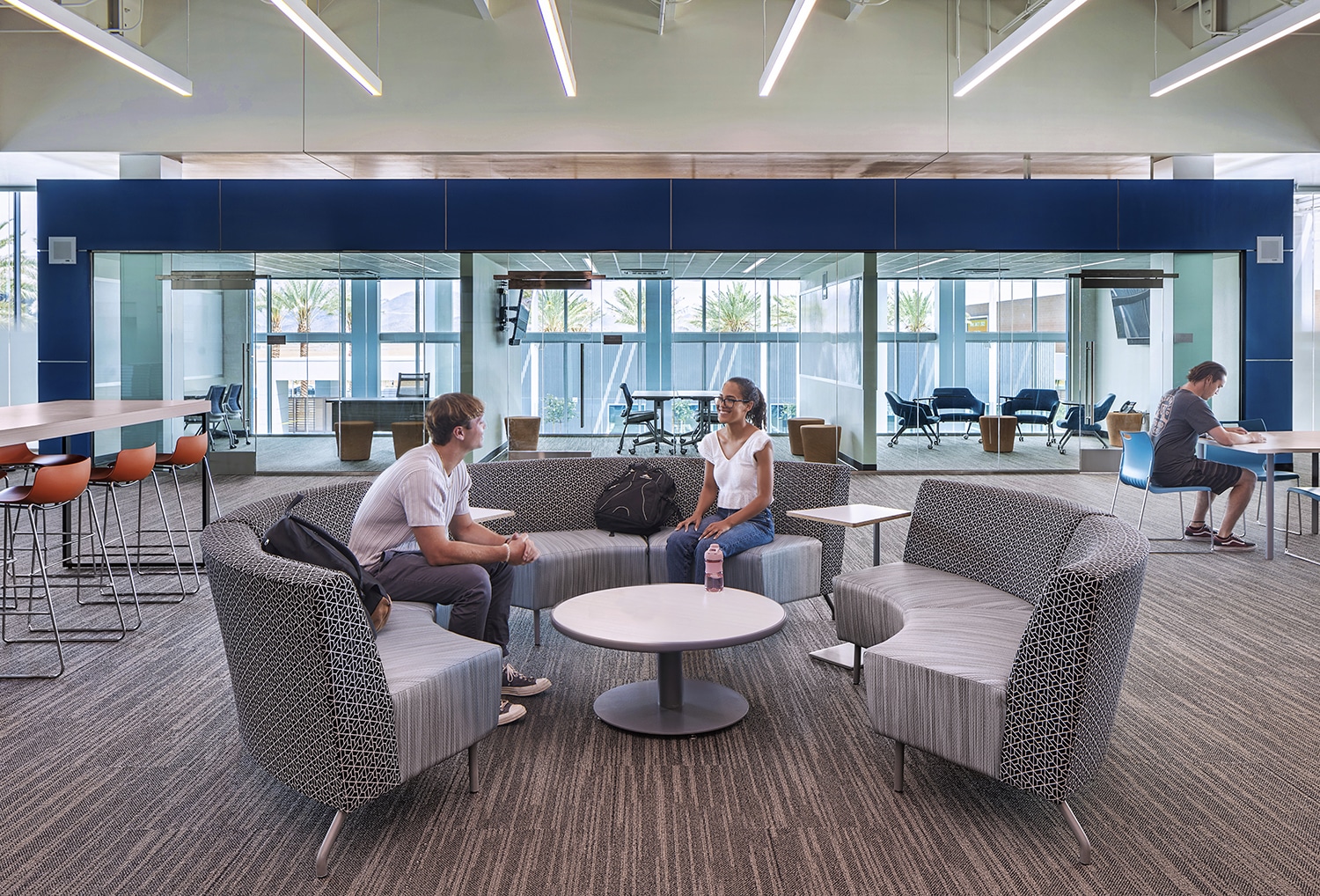
When collaboration is done well, FF&E becomes more than a collection of products. Furniture connects architecture to instruction, design intent to daily use, and vision to reality. Classrooms function more intuitively. Shared spaces better support collaboration and flexibility. Educators feel supported rather than constrained by their environments.
In K-12 projects, the success of FF&E is measured not by how it looks on move in day, but by how it performs over time. Strong collaboration ensures furniture solutions are adaptable, durable, and aligned with the evolving needs of students and educators.
A unified process leads to better outcomes
Collaboration is not an added step. It is the foundation of effective FF&E planning. By approaching furniture design as a shared effort among school districts, architects, interior designers, and consultants, projects benefit from fewer conflicts, clearer communication, and environments that truly support learning.
In education design, furniture plays a meaningful role in how students engage, move, focus, and belong. That responsibility deserves a coordinated, thoughtful, and inclusive process from start to finish.